


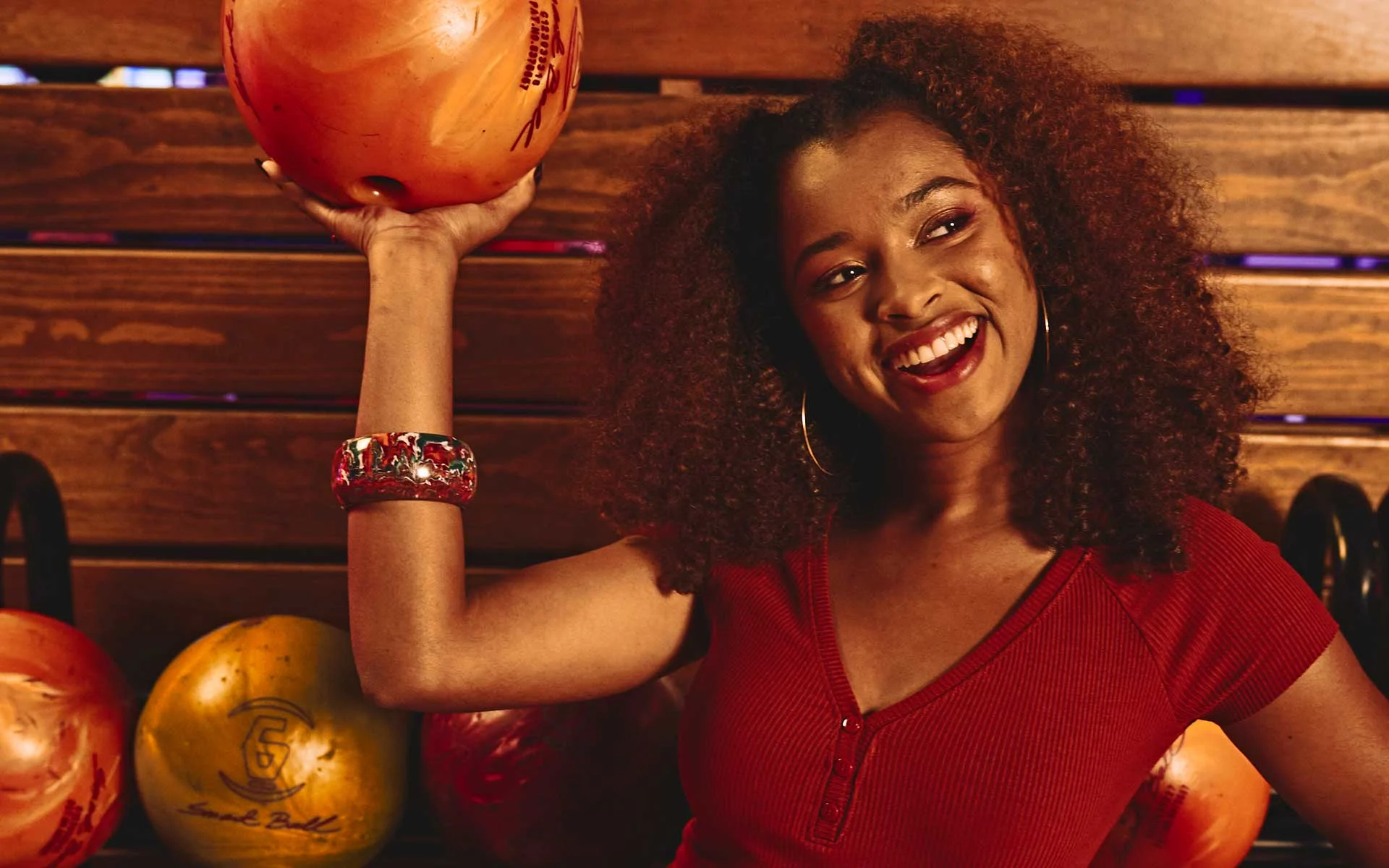
Everyone remembers their first trip to the bowling center. The shoes feel weird. The ball feels heavier than expected. The pins look impossibly far away. And then something unexpected happens: you throw, the ball rolls, pins scatter, and suddenly you understand what all the fuss is about. Bowling hooks people because the basics are simple enough to enjoy immediately, but the skill ceiling is high enough to keep you coming back for years.
This guide covers everything a first-time bowler needs to know before walking into Bowlero: how to pick the right ball, how to throw it with something resembling technique, and how to look like you belong even if your score says otherwise.
Picking the right ball (it matters more than you think)
The ball rack at a bowling center can be intimidating. Rows of colorful spheres in different weights, finger hole sizes, and surface textures. Here is the shortcut: pick a ball that weighs roughly ten percent of your body weight, capped at around fourteen or fifteen pounds. A 150-pound bowler should start with a 14-pound ball. If that feels heavy after two throws, drop down a pound. Control beats power every time, especially when you are learning.
The finger holes matter just as much. Your thumb should slide in and out smoothly without sticking. Your middle and ring fingers should rest comfortably up to the second knuckle. If you are jamming your fingers in or gripping to keep the ball from slipping, try a different ball. House balls at Bowlero come in a wide range of sizes and weights, so take a minute to test a few before committing. Comfort in your grip translates directly to consistency in your throw.
Skip the urge to grab the heaviest ball on the rack. A lighter ball thrown with control will outperform a heavy ball thrown with strain every single time. Your shoulders will thank you, and your accuracy will improve immediately.
The approach: how to walk, stand, and throw
The approach is the four or five steps you take before releasing the ball. It sounds simple because it is. Stand about four and a half steps behind the foul line. Hold the ball at chest height with both hands. Start your first step and let the ball swing back naturally as you walk forward. On your last step, your sliding foot (left foot for right-handed bowlers) plants near the foul line, and the ball releases off your hand at the lowest point of the swing.
Keep your eyes on the target, not the pins. The arrows painted on the lane about fifteen feet past the foul line are your aiming markers. For a straight ball, aim for the second arrow from the right (right-handed bowlers) or the second arrow from the left (left-handed). That line carries the ball toward the pocket between the headpin and the pin directly behind it, which is where strikes happen.
The most common beginner mistake is muscling the throw. Your arm should swing like a pendulum, not punch like a piston. Let gravity and momentum do the work. The ball does not need speed to knock down pins. It needs accuracy and a clean release. A smooth throw at moderate speed beats a rocket throw that misses the pocket by three boards.
Understanding the scoreboard (it is simpler than it looks)
Bowling scoring intimidates people because it looks like hieroglyphics. It is actually straightforward once you know three things. A game is ten frames. Each frame gives you two chances to knock down all ten pins. Knock them all down on the first throw and that is a strike, marked with an X. Knock down the rest on your second throw and that is a spare, marked with a slash.
Strikes and spares earn bonus points. A strike adds the total of your next two throws to that frame's score. A spare adds the total of your next one throw. A regular frame just adds the number of pins you knocked down. The tenth frame gives you up to three throws if you strike or spare, which is why the last frame always feels like a big moment.
Most bowling centers, including Bowlero, score everything automatically on the overhead screen. You do not need to do math. But understanding the scoring helps you appreciate why a string of strikes builds so fast (each one compounds) and why picking up spares consistently is the fastest way to improve your average.
The etiquette: unwritten rules worth knowing
Bowling has a few unwritten rules that every beginner should know. The biggest one: when two bowlers on adjacent lanes are ready at the same time, the bowler on the right goes first. Wait until the person next to you has thrown before stepping onto the approach. It is not a strict rule at a casual outing, but it shows you know the rhythm of the game.
Stay behind the foul line. Crossing it does not just trigger a foul (your throw does not count). It also tracks oil from the lane onto your shoes, which makes your approach slippery for the next throw. The line exists for a reason, and staying behind it is both a safety habit and a scoring one.
Be ready when it is your turn. Nothing slows down a lane faster than the bowler who is on their phone when their name lights up on the screen. Stay engaged, cheer for your group, and keep the pace moving. The experiences at Bowlero are designed to keep the energy up, from the music to the lighting, and matching that energy makes the whole outing better for everyone.
Finally, respect the equipment. Return your ball to your lane's rack, not the main rack. Keep food and drinks away from the approach area. And treat the rental shoes like you borrowed your friend's car: return them in the condition you got them.
From first throw to regular bowler
Most first-time bowlers discover something on their first visit that keeps them coming back: bowling rewards repetition. Your second game is better than your first. Your third visit is better than your second. And before long, you are paying attention to your footwork, experimenting with ball weight, and feeling the satisfaction of a spare pickup that would have been a gutter ball three weeks ago.
Bowlero makes the progression easy. Specials keep regular visits affordable. The atmosphere keeps it social. And when you are ready for something more structured, leagues give you a weekly commitment that turns casual bowling into a genuine hobby.
Lace up and throw your first frame
Every expert bowler started exactly where you are: staring at ten pins and hoping for the best. Find a Bowlero near you, grab a ball that fits, and throw your first frame. The strikes will come. The spares will follow. And the fun starts the moment you let go.